A historic preservation consultant in Santa Fe once got a call from an owner in the Downtown and Eastside Historic District who wanted a professional survey done on his building. He had checked the property's status before he bought it. He deliberately avoided anything marked "Contributing" because he assumed those buildings were too expensive to renovate. He bought what he believed was a Non-Contributing structure instead, on the theory that it would give him more room to work.
Then he proposed the renovation, and the Historic Districts Review Board questioned whether his building should have been Contributing all along.
He was surprised. The consultant who eventually did the survey wasn't. In a historic district, that designation isn't a fact fixed at the moment of sale. It's a working determination the board can revisit, and the moment it gets revisited most often is exactly when an owner proposes the kind of change that made the house worth buying in the first place.
That's the thing about the Historic Eastside that a listing sheet won't tell you: the label on the house you're touring today is provisional in a way most buyers never think to ask about.
What the Label Actually Controls
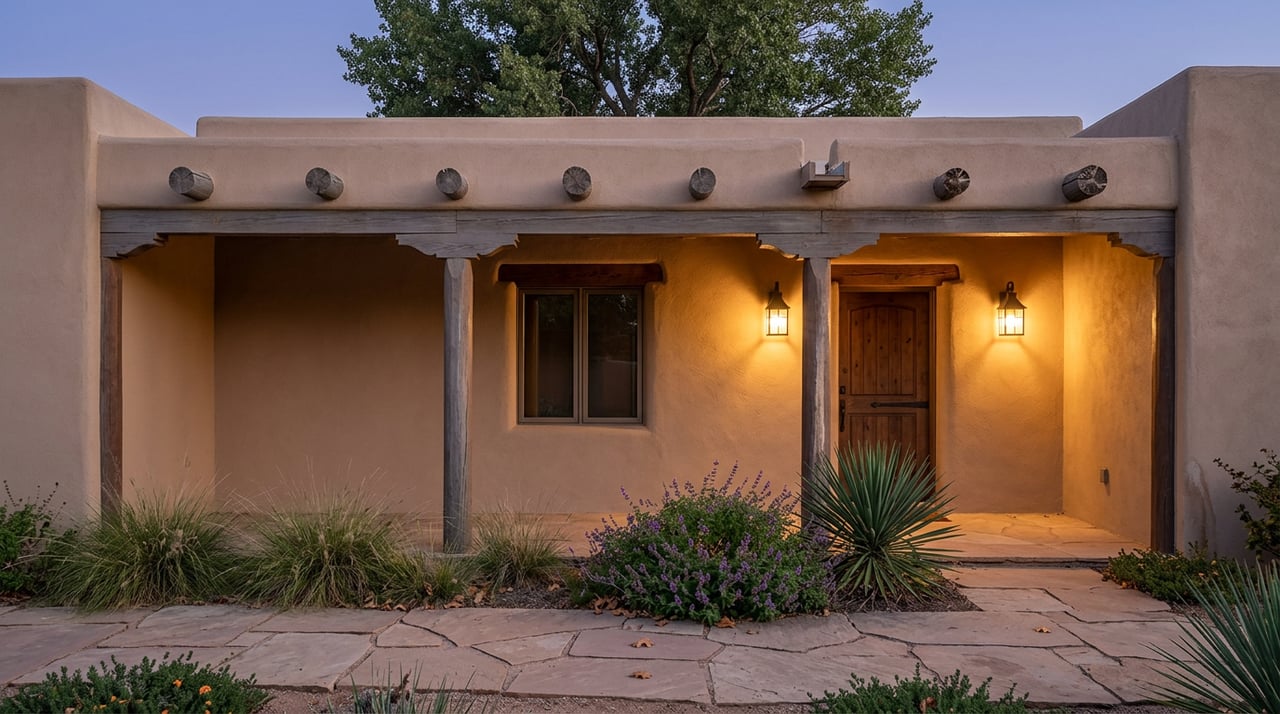
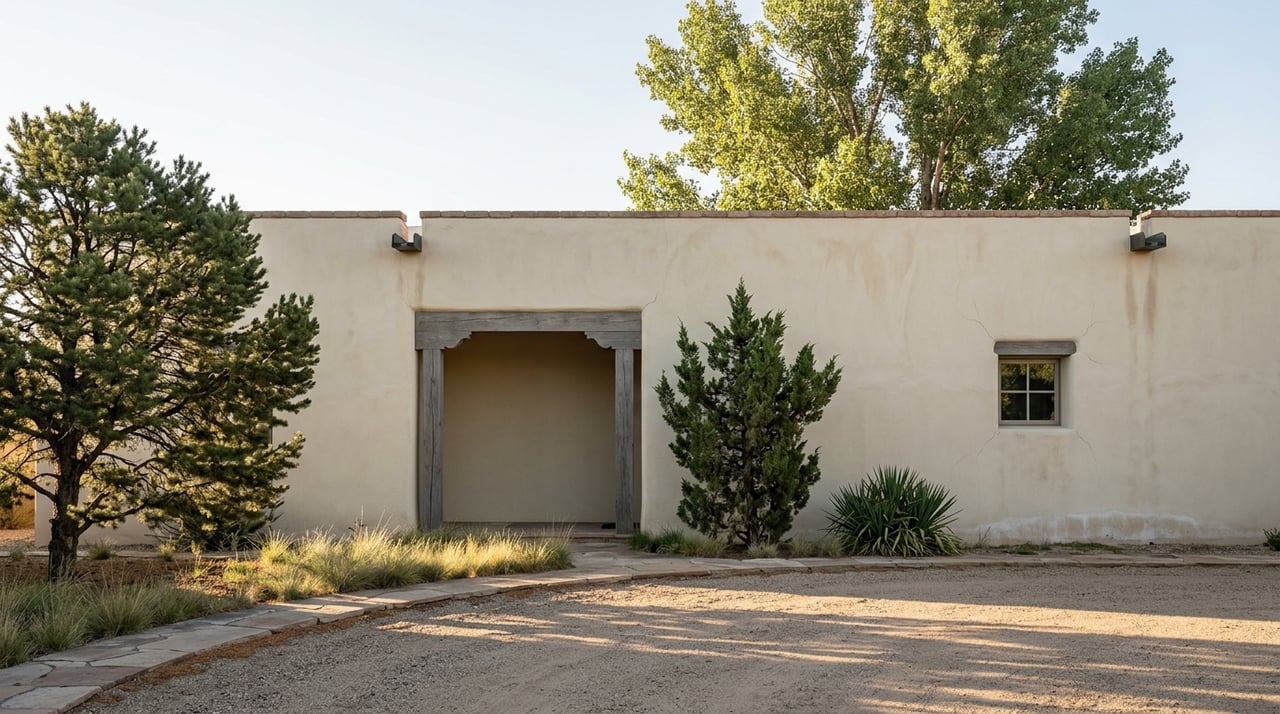
Every property inside Santa Fe's Downtown and Eastside Historic District carries one of a few designations, and the two that matter most to a buyer are Contributing and Non-Contributing. A Contributing structure is one the city considers part of what makes the district historic, and it draws the tightest restrictions: window and door materials, stucco color within an approved earth-tone range, height limits, and a cap on how much you can add to the original footprint before you need a formal exception. A Non-Contributing structure, usually a newer build or one that's been altered enough to lose its historic character, still falls under the same design code, but with more flexibility on those same points.
Almost any exterior change visible from the street triggers some form of city review, regardless of which designation applies. Where the two diverge is in how much scrutiny that review carries, and how much room the board has to say no.
Four Cases, One District
The clearest way to see how differently this plays out is to look at what the board actually decided across real applications inside the same district over the past few years.
| Address | Status | What the owner proposed | What it required |
|---|---|---|---|
| 329 Otero St. | Contributing | Replace doors and windows on the main residence | A formal exception to the section governing windows and doors on contributing structures |
| 1-A Camino Pequeño | Under review, recommended Contributing | Status review before planning future renovations | Full facade designation process, evaluating a 1973 stucco-on-frame structure with a mix of Pueblo and Territorial Revival features |
| 912 Old Santa Fe Trail | Non-Contributing | Status review before planning future renovations | Confirmation the mid-modern, late-1950s structure would keep its non-contributing status, even though it straddles two historic districts and falls under the stricter of the two codes |
| 107 E Palace Ave. (Units A1, A2, A3) | Contributing | Replace windows and doors, install an ADA ramp, reroof, stucco, paint, repave | Board review covering every item on that list, since a contributing designation extends scrutiny to nearly the whole exterior scope of work |
Two of these owners weren't asking to build anything new. They were asking the board to tell them, formally, what they owned before they spent money assuming otherwise. That's not a paperwork formality. It's the actual first step for anyone planning meaningful work on an Eastside property, and it's a step a lot of buyers skip because they assume the tax record or a GIS layer already answered the question.
The City's Own Map Comes With a Warning Label
Santa Fe maintains a Historic Buildings Status layer on its GIS mapping portal, and it's the closest thing to a public source for checking a property's designation before you buy. The city's own historic preservation page carries a note next to that layer telling users the status shown is being actively updated and to check with staff to verify before relying on it.
That disclaimer is the whole story in one sentence. The map is a starting point, not a determination. The only way to get a determination is to ask the Historic Preservation Division directly, and if you're planning real work, to commission the same kind of assessment, a Historic Cultural Properties Inventory, that resolved the case above. Filing any case with the city carries a $75 fee to open, whether it heads toward a staff-level administrative approval or a full hearing before the Historic Districts Review Board, which meets only on the second and fourth Tuesday of each month. That cadence matters for timing an offer or a renovation plan around a board cycle rather than assuming a quick staff sign-off.
Why This Is a Pricing Question, Not Just a Permitting One
As of early 2026, entry points into the Historic Eastside had smaller casitas and fixer opportunities priced near $1 million, with fully restored estates and compounds ranging from roughly $3 million up past $10 million. That spread exists because so much of an Eastside home's value sits in exactly the features the historic code protects: kiva fireplaces, vigas, hand-troweled plaster, the proportions of a Territorial-era window opening.
A buyer who plans to close on a fixer at the lower end of that range is usually budgeting the renovation around an assumed status. If that status shifts toward Contributing once the work is proposed, the approved materials list narrows, the footprint cap tightens, and the timeline extends by however many board cycles it takes to work through a formal hearing instead of an administrative sign-off. None of that shows up in a home inspection. It shows up in a change order six months into a project that started with a set of assumptions nobody confirmed on paper.
What to Confirm Before You Write an Offer
If you're looking at a property inside the district with plans to renovate, three things are worth doing before you're under contract rather than after.
Pull the Historic Buildings Status layer on the city's GIS portal as a first pass, understanding it's a starting point rather than a final answer. Contact the Historic Preservation Division directly and ask them to confirm the current designation in writing. If your plans involve anything beyond routine maintenance, especially anything close to a 50 percent footprint addition, ask whether a Historic Cultural Properties Inventory makes sense before you finalize a renovation budget, not after.
None of this changes what makes the Eastside worth buying into. The same review process that adds friction to a renovation is what has kept Acequia Madre, Camino del Monte Sol, and the lanes around Palace Avenue looking the way they've looked for a century. The friction is the point. It just needs to be priced in before closing, not discovered during it.
A Few Questions Buyers Ask Early
Does a Non-Contributing designation mean no review at all? No. Any exterior change visible from the street still goes through the city, either as a staff-level administrative approval or a full board hearing. Non-Contributing status simply gives the board more latitude to approve changes that a Contributing structure couldn't make without a formal exception.
Can a designation actually move from one status to the other? Yes, and it happens through the same process described above. The board can revisit a building's status when an owner requests a formal review, which is often triggered by a proposed renovation rather than a routine inspection.
Who pays for a Historic Cultural Properties Inventory if the board wants one? The property owner typically commissions it, separate from the $75 fee to open a case with the city. For anyone planning a significant renovation on an Eastside property, it's worth treating as part of the due diligence budget rather than an unexpected cost that shows up later.
If you're weighing a purchase in the Historic Eastside or getting a historic property ready to list, it's worth having someone in your corner who's tracked how these cases actually resolve, not just how the code reads. Paige Cochran and Kareem Abu-Zeid work this district regularly and can help you confirm what you're actually buying, or selling, before the paperwork does the deciding for you.