By Paige Cochran
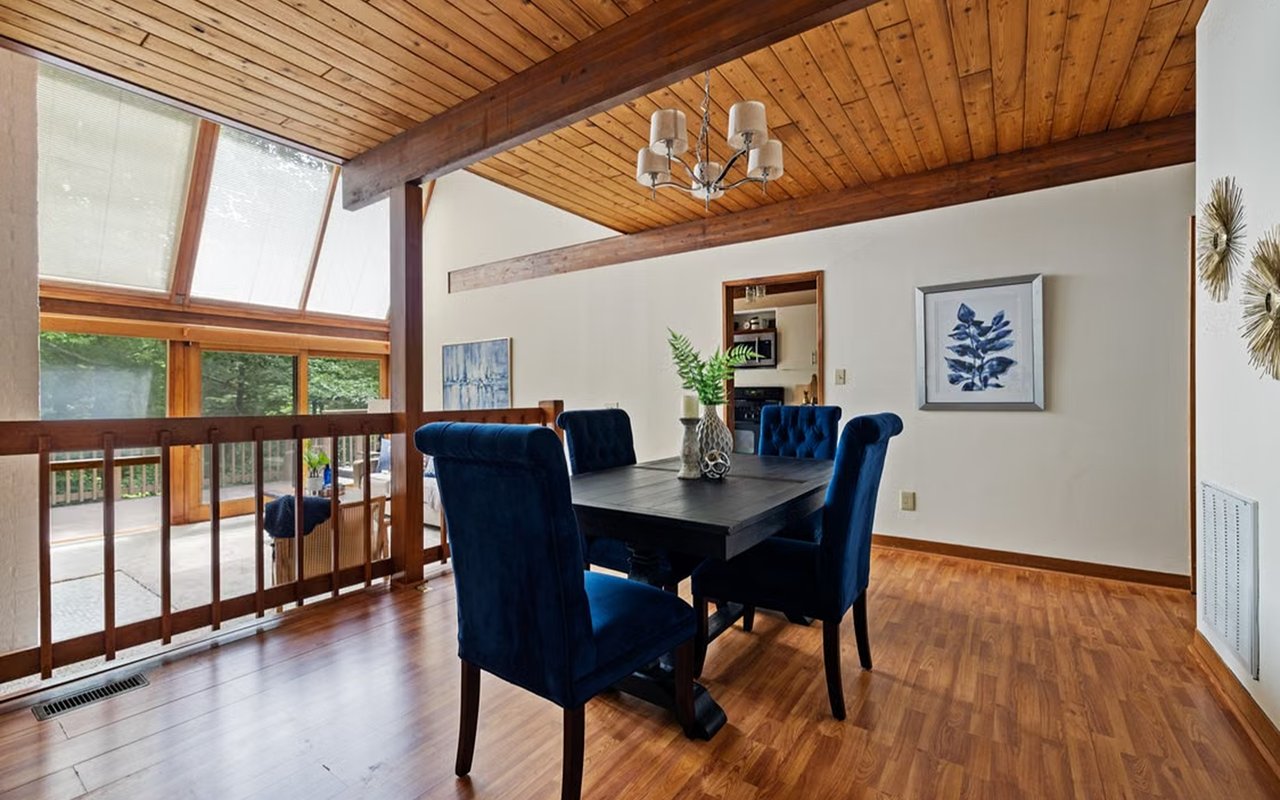
Look up in almost any historic adobe off Canyon Road, and you will find them: rugged wooden beams spanning the room, topped by a tight lattice of slender branches. These are vigas and latillas, and they are one of the truest signatures of Santa Fe homes.
More than a design flourish, they carry centuries of building tradition, regional craft, and a distinctly high-desert sense of shelter. If you are drawn to the character of Santa Fe real estate, understanding these ceilings will help you see the difference between a home that merely borrows the look and one that lives it.
Buyers and sellers across Santa Fe care about this kind of authenticity. Here is what they are, why they matter, and how to evaluate them when you tour a property.
Key Takeaways
- Vigas are the large exposed roof beams, and latillas are the smaller poles or branches laid across them, together forming a hallmark ceiling in Santa Fe homes.
- These ceilings trace back to Pueblo and Spanish Colonial building methods suited to the high-desert climate of northern New Mexico.
- Authentic viga and latilla ceilings appear in Santa Fe real estate ranging from historic adobes to newer Pueblo Revival and Territorial-style construction.
- Maintenance centers on protecting exposed wood from sun, moisture, and pests.
- Homes with genuine viga and latilla detailing often hold strong appeal in the Santa Fe market because they reflect the region's architectural heritage.
What Are Vigas and Latillas in Santa Fe Homes?
Vigas and latillas are the exposed wooden ceiling components that define traditional adobe construction: vigas are the heavy horizontal roof beams, usually peeled pine or spruce logs, and latillas are the thinner poles, branches, or split saplings laid across the vigas to form the ceiling surface. Together, they create the layered, textural look you see throughout historic Santa Fe real estate.
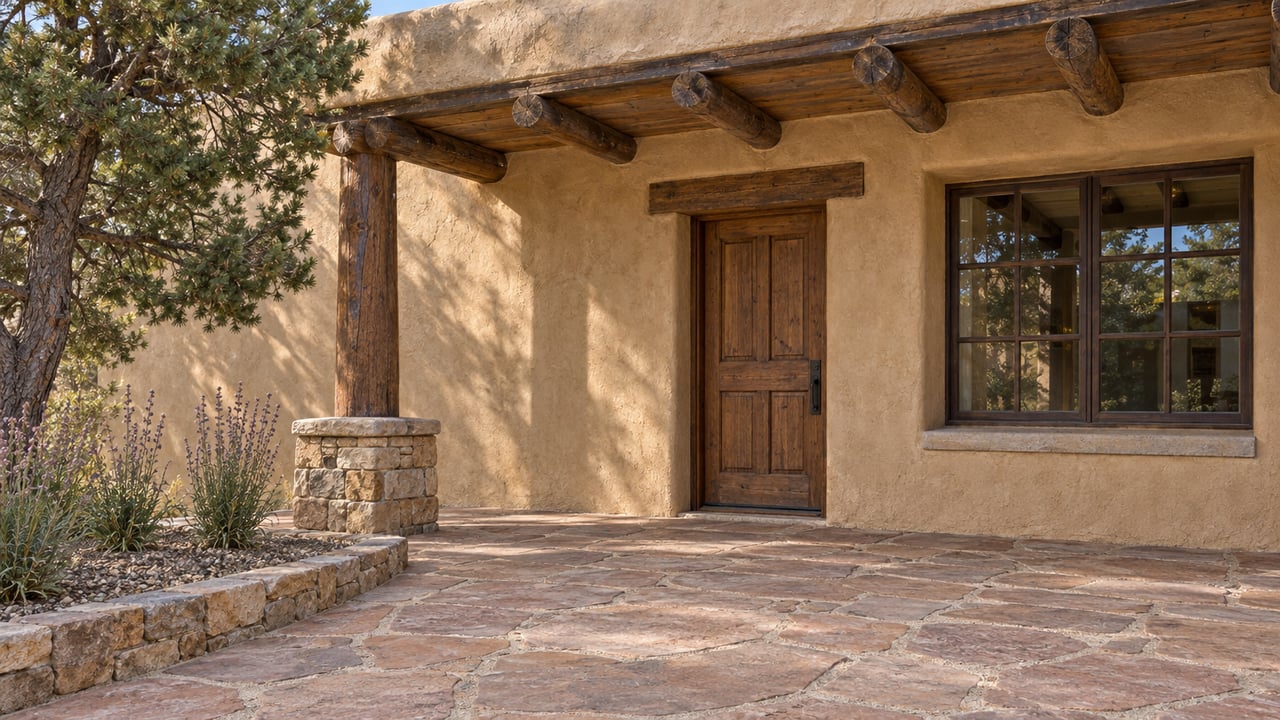
In original construction, the vigas carried the structural load of the flat roof, extending through the exterior walls so their rounded ends are visible outside as well. The latillas were placed above them, often in a herringbone pattern, then covered with brush and packed earth. Modern homes may replicate the effect with vigas below an insulated roof deck, but the visual language stays the same.
In original construction, the vigas carried the structural load of the flat roof, extending through the exterior walls so their rounded ends are visible outside as well. The latillas were placed above them, often in a herringbone pattern, then covered with brush and packed earth. Modern homes may replicate the effect with vigas below an insulated roof deck, but the visual language stays the same.
What To Look For
- Viga ends that project through exterior walls, a classic marker of authentic Santa Fe adobe design.
- Latillas arranged in a diagonal or herringbone layout, which signals careful traditional craft.
- Consistent wood tone and hand-finished texture rather than uniform machine milling.
- Ceiling height and beam spacing that feel proportional to the room and the home's era.
Why Did Viga and Latilla Ceilings Develop in Santa Fe?
Viga and latilla ceilings developed in Santa Fe because the high-desert environment of northern New Mexico rewarded thick-walled, timber-roofed adobe homes that held warmth through cold nights and stayed cool during bright, dry days. Pueblo builders used local ponderosa pine and available saplings long before Spanish settlers arrived, and the two traditions merged into the enduring style you now see across the city.
Timber was one of the few abundant structural materials in the region, so beams and poles became the natural roofing solution. The result was practical and beautiful at once, and it suited Santa Fe's elevation of roughly 7,000 feet, where sunny days and cool evenings ask a home to moderate temperature swings. That climate logic is part of why these ceilings never went out of style here.
Timber was one of the few abundant structural materials in the region, so beams and poles became the natural roofing solution. The result was practical and beautiful at once, and it suited Santa Fe's elevation of roughly 7,000 feet, where sunny days and cool evenings ask a home to moderate temperature swings. That climate logic is part of why these ceilings never went out of style here.
How These Ceilings Fit Santa Fe Living
- They add insulating mass and warmth that suit the city's cool, clear high-desert nights.
- They reflect the Pueblo and Spanish Colonial roots visible throughout the Pueblo Revival architecture in Santa Fe real estate.
- They pair naturally with kiva fireplaces, nichos, and thick adobe walls in many homes.
How Do You Maintain Viga and Latilla Ceilings?
Viga and latilla ceilings are best maintained by protecting the exposed wood from sun exposure, moisture intrusion, and pests, and by inspecting the beams periodically for cracking, staining, or movement. Because the wood is visible and often original, upkeep is mostly about prevention, and it is very manageable when a home has been cared for.
Interior vigas tend to age gracefully in Santa Fe's dry air, developing a rich patina over decades. The areas that need attention are usually where wood meets the outdoors, since projecting viga ends and rooftop connections face weather directly. A well-maintained home in Santa Fe will show clean, sealed beam ends and no water staining on the latillas.
Interior vigas tend to age gracefully in Santa Fe's dry air, developing a rich patina over decades. The areas that need attention are usually where wood meets the outdoors, since projecting viga ends and rooftop connections face weather directly. A well-maintained home in Santa Fe will show clean, sealed beam ends and no water staining on the latillas.
Top Considerations
- Check projecting viga ends for weathering, cracking, or past repairs.
- Look for water stains on latillas, which can point to roof issues above.
- Ask about the finish or sealant used and how recently it was refreshed.
- Confirm whether the ceiling is structural or decorative, as this affects any future remodeling.
FAQs
What Is the Difference Between a Viga and a Latilla?
A viga is the large structural roof beam, while a latilla is one of the smaller poles or branches laid across the vigas to form the ceiling surface. In Santa Fe homes, you usually see both together, with the heavy vigas supporting the finer latilla lattice above.
Are Viga Ceilings Only Found in Old Adobe Homes?
No, viga and latilla ceilings appear in both historic adobes and newer construction throughout Santa Fe real estate. Many Pueblo Revival and Territorial-style homes built in recent decades incorporate authentic or replicated vigas to honor the regional style.
Do Exposed Vigas Require a Lot of Upkeep?
Exposed vigas require modest, preventive upkeep, mostly protecting the wood from moisture and sun and watching for cracking or staining. In Santa Fe's dry climate, interior beams generally age very well.
Bringing Home the Character of Viga and Latilla Ceilings in Santa Fe
Viga and latilla ceilings are among the most authentic details you can find in Santa Fe homes, blending Pueblo and Spanish Colonial craft with the practical wisdom of high-desert living. Knowing what to look for, how these ceilings are maintained, and why they resonate with buyers gives you a real advantage whether you are searching for a historic adobe or a thoughtfully built newer property.
If these details speak to you, I would love to help. As your Santa Fe agent, I can guide you toward homes that carry this heritage. Reach out to me, Paige Cochran, to start exploring Santa Fe homes for sale that reflect the character you are looking for.
If these details speak to you, I would love to help. As your Santa Fe agent, I can guide you toward homes that carry this heritage. Reach out to me, Paige Cochran, to start exploring Santa Fe homes for sale that reflect the character you are looking for.