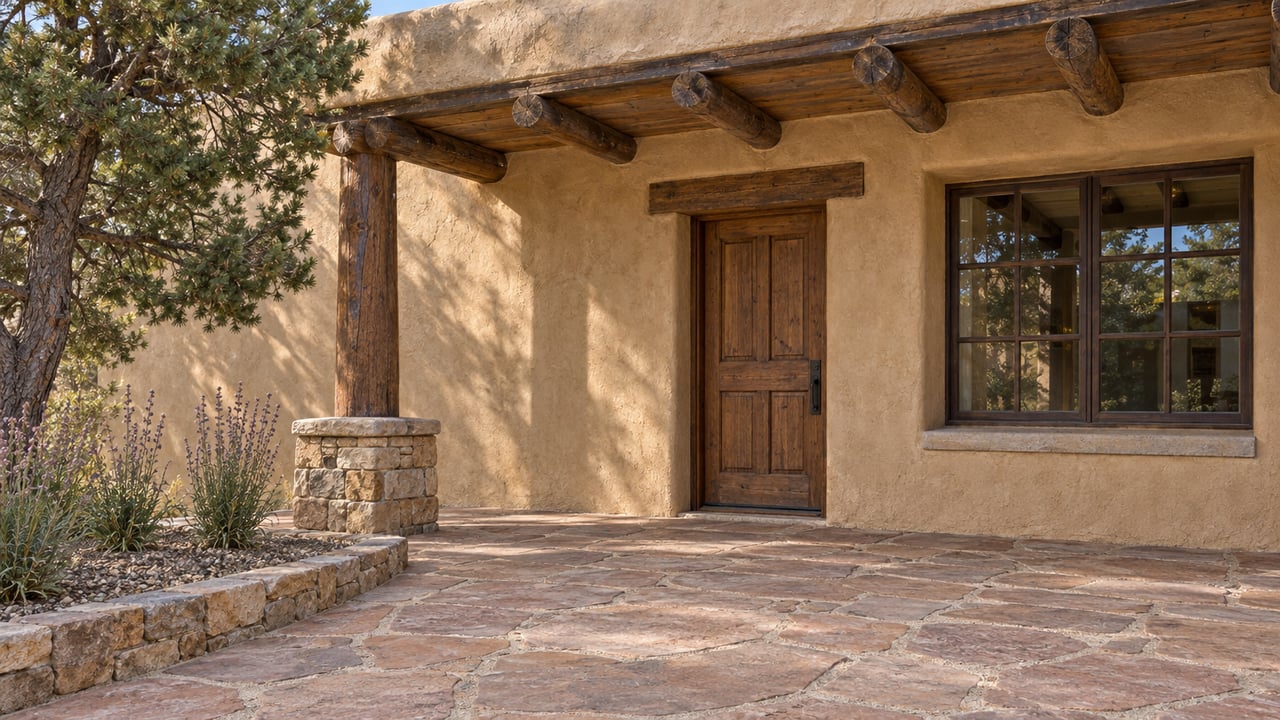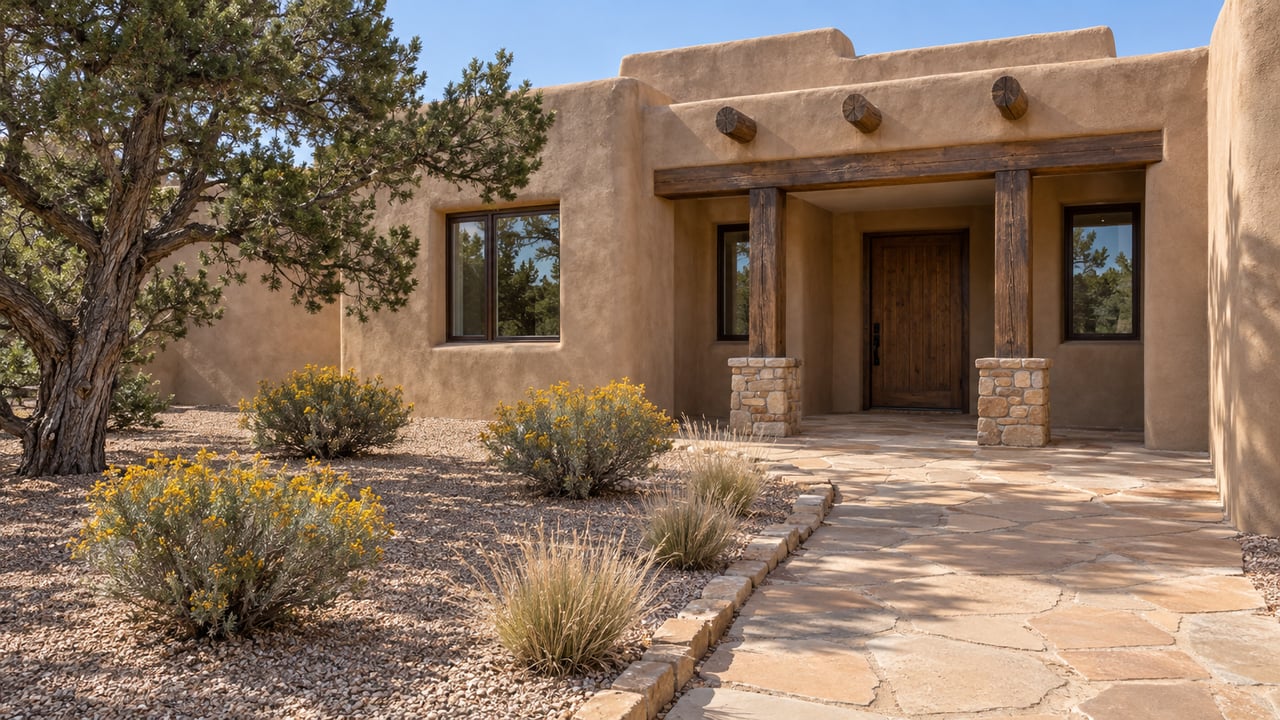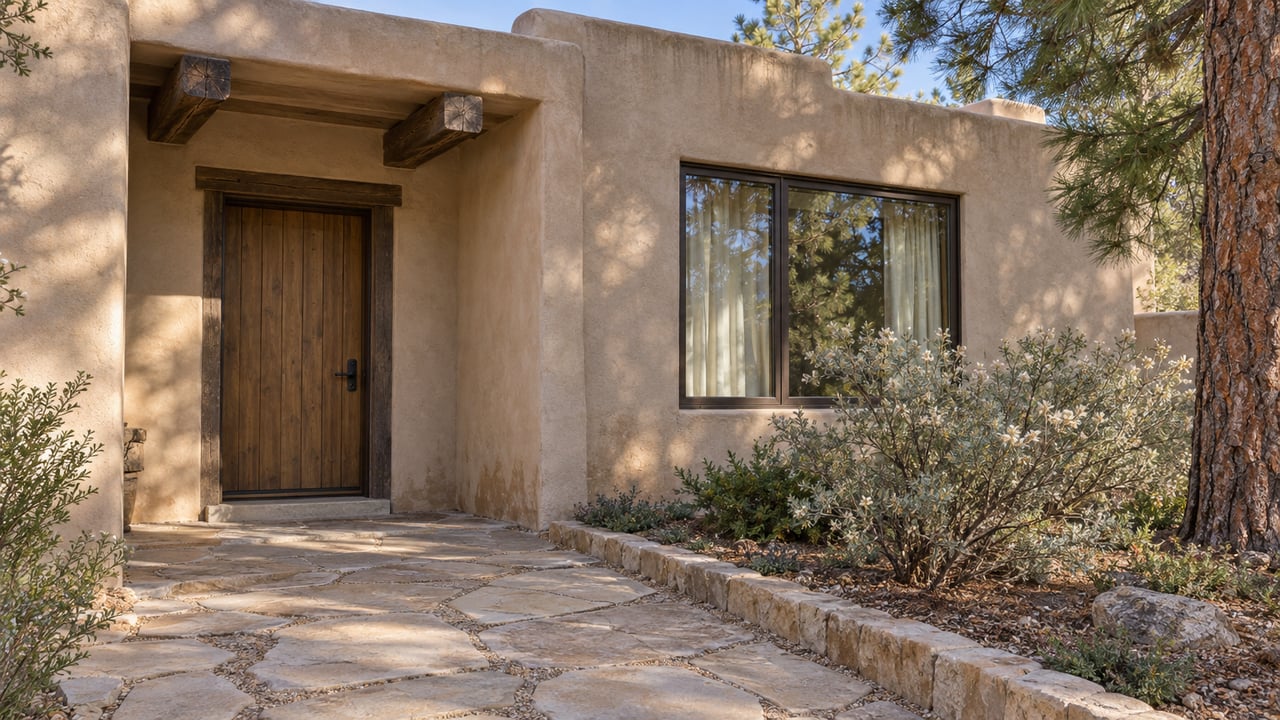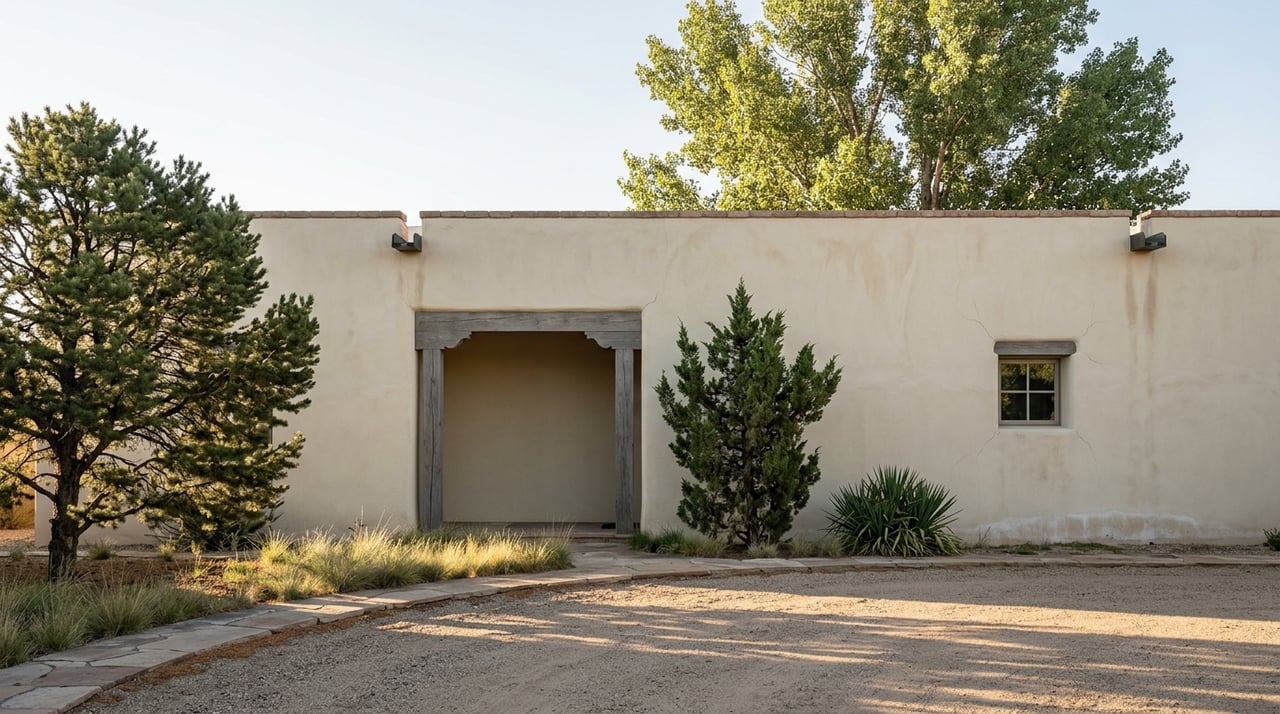
Drive six miles north from the Plaza and the piñon and juniper give way to cottonwoods. The light changes first, then the air. Little Tesuque Creek cuts through the valley here, and the shade it throws keeps this stretch of Northern New Mexico noticeably cooler and greener than the high desert just south of it. This is Tesuque Village, and if you live here, you already know its shape: a scatter of homes along dirt lanes, a lot of horses, and almost no commerce at all.
That last part is not an accident, and it is the reason a Saturday afternoon here can feel crowded in a village most people would call empty. Tesuque's entire commercial core consists of three addresses: Tesuque Village Market, the restaurant El Nido, and the Shidoni Foundry sculpture garden. Three doors. That is the whole of it. And because there is no fourth option, no competing coffee shop or overflow parking lot, those three places absorb every errand, every date night, and every out-of-town visitor the valley produces. Understanding how that works, and when to route around it, is the actual local knowledge here. Not the address of the market. Everyone knows the address of the market.
The Three Doors
Locals shorten Tesuque Village Market to TVM, and the nickname tells you how the place functions. It is not a single-purpose business. It is a bakery counter, a general store, and a full restaurant operating out of one building, which means the same room that sells you a morning coffee and a newspaper also serves margaritas and wood-fired pizza by evening. There is no other version of that combination for miles, so TVM ends up doing the job that in most neighborhoods would require three or four separate storefronts.
El Nido sits just down the road and pulls a different crowd. It has a history that shows up in how the space feels: the building was a dance hall in the 1920s before it became a restaurant, and it now runs on open-fire cooking and wood-fired technique, the kind of place people drive out from town for, not just stumble into. It reads as a destination because it is one.
Shidoni Foundry is the piece that turns Tesuque into a stop on other people's itineraries. The five-acre sculpture garden and gallery has been a landmark for decades, and on weekends visitors can watch molten bronze poured at the foundry itself. That is not a quiet, browse-at-your-leisure kind of draw. It is scheduled, it is dramatic, and it brings people who have never set foot in the valley before.
Put those three together and you get a strange arithmetic. A village of well under a thousand residents somehow generates enough weekend traffic that TVM's parking lot can fill by midday. On busy weekends, visitor traffic and residents' errands share the same two-block stretch.
The Food Network Effect
TVM's tortilla soup has a following that predates most of its current customers, thanks in part to a Food Network segment where chef Giada De Laurentiis stopped in after visiting Shidoni and called out the soup by name. That kind of exposure does not fade the way a local review does. It sits on the internet permanently, and it means TVM gets discovered on a rolling basis by people who have never heard of Tesuque otherwise. For residents, that translates into a very specific pattern: the market is often at its most crowded precisely when a tour bus, a wedding party from Bishop's Lodge, or a couple who watched an old rerun decides today is the day to make the drive.
None of this is a complaint. It is just the terrain. A village with three commercial addresses and one of them anchored by a Food Network moment is going to have weekend surges that a village with a normal commercial district would never see, because there is nowhere else for that traffic to go.
When Residents Actually Go
The workaround, once you have lived here a while, is timing rather than avoidance. Weekday mornings at TVM belong almost entirely to the neighborhood. That is when you get the counter to yourself, when the bakery case still has the good pastries, and when the pace matches the rest of the valley rather than the pace of a Saturday tour stop. Weekend afternoons, particularly when Shidoni has a pour scheduled, are the opposite: parking gets tight, the patio fills, and the crowd skews toward people who are seeing the market for the first time.
El Nido runs on its own separate clock, driven by dinner reservations rather than daytime foot traffic, so it rarely collides with the TVM crowd directly. But stack a Saturday bronze pour at Shidoni with a full house at El Nido that same evening, and Tesuque's one real road through the village center carries more visitor traffic in a single day than most of its residents produce in a week.
The Valley Explains the Rest
Part of why this contrast feels so pronounced is the setting itself. Tesuque sits low in a river valley shaded by mature cottonwoods, distinct from the open high desert that defines most of Santa Fe County. That shade and the creek running through it keep the air cooler and the color palette greener for most of the year. It is the kind of geography that invites a slower pace on an ordinary Tuesday, which makes the occasional Saturday surge around the three commercial doors feel even more out of step with the rest of the valley's rhythm.
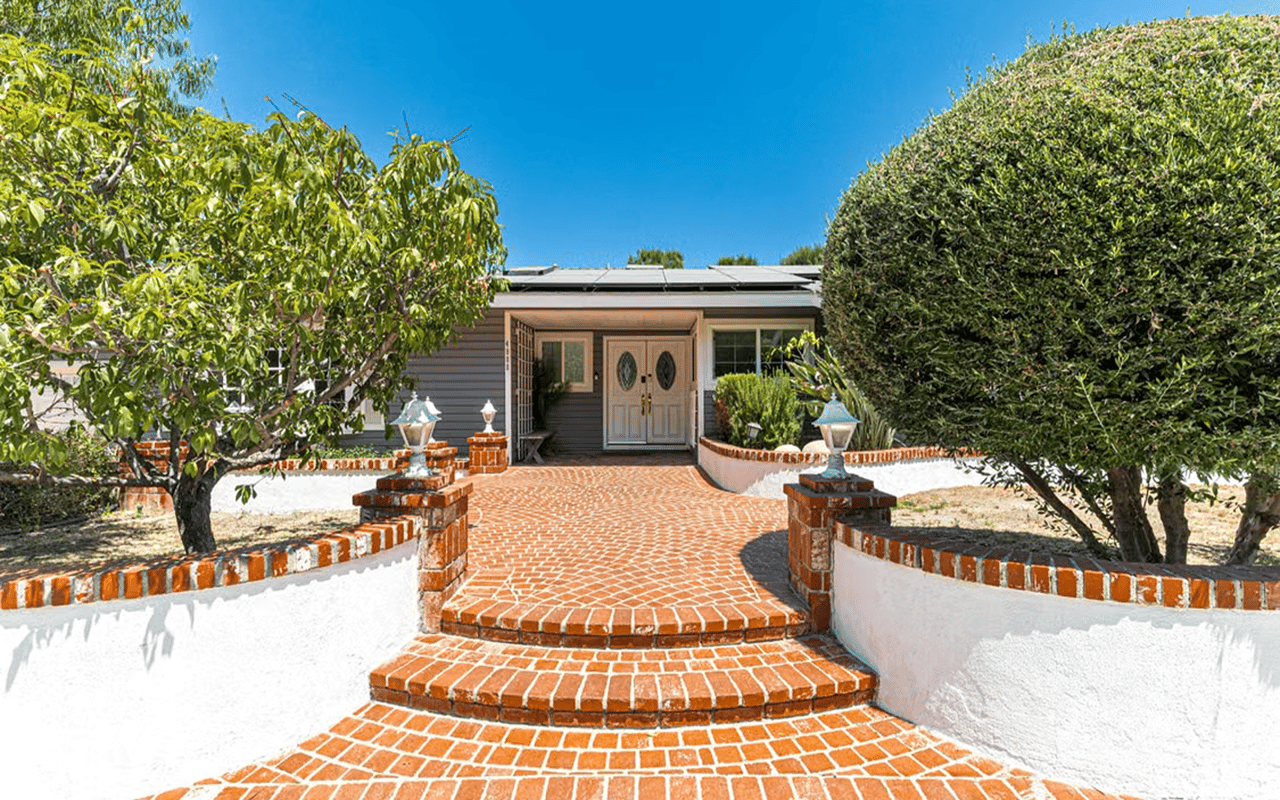
The residential fabric matches that pace. There is no grid here, no manicured subdivision layout. Homes sit along winding dirt lanes and narrow roads, several still zoned and used for horse-keeping, and the village backs directly up against Santa Fe National Forest, giving residents trail access most in-town neighborhoods can only drive to. That backdrop is what makes the commercial core's outsized pull feel almost paradoxical. You can walk out your door into forest quiet, and twenty minutes later find yourself waiting for a parking spot at the market because a foundry event across the road just let out.
Why There Will Not Be a Fourth Business
Part of the reason Tesuque's commercial core has stayed fixed at three addresses for decades is structural, not incidental. The village carries an official Traditional Historic Community designation, and the local overlay tied to that status restricts how much of any given lot can be built on, generally to a fraction of what a typical residential zone would allow. That kind of limit is designed to preserve the rural, low-density feel of the valley, and one of its side effects is that new commercial development simply does not happen here the way it might in a neighborhood without that protection. TVM, El Nido, and Shidoni are not the current crop of businesses in a growing commercial strip. They are functionally the permanent set, and residents plan their week around three doors because three doors is what the village has decided to keep.
That is the piece worth knowing if you already live here and have wondered why a village this small can feel this busy on the wrong Saturday. It is not that Tesuque changed. It is that the same three addresses that make the valley feel connected on a quiet Tuesday morning are doing double duty as a regional draw every time a bronze pour or a dinner reservation brings in a crowd that has never had to learn the timing the way you have.
If you are thinking about what a home in this valley is actually worth given how it lives day to day, not just what a listing sheet says, Paige Cochran and Kareem Abu-Zeid work Tesuque and the rest of Northern New Mexico with exactly that kind of ground-level detail. Reach out through Paige Cochran for a free home valuation grounded in how the neighborhood actually functions, not just its comps.
This article is general information, not legal, tax or financial advice. Consult a qualified professional about your situation.