By Paige Cochran
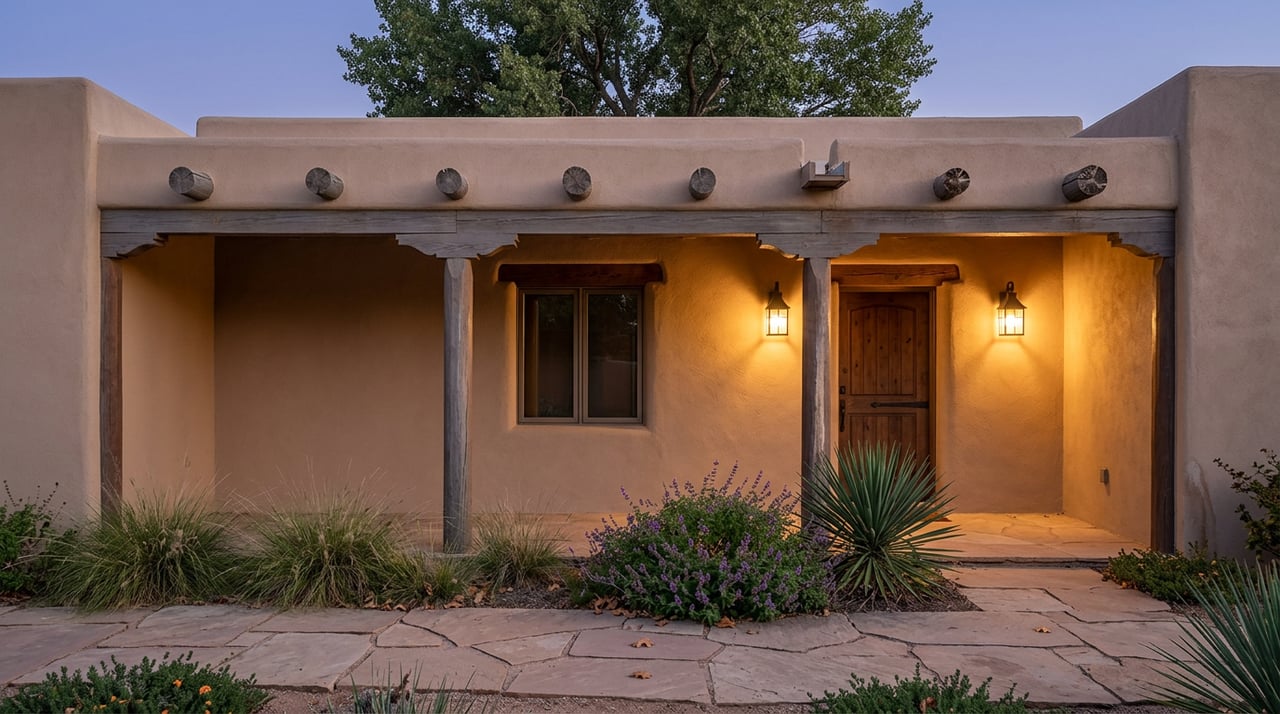
Santa Fe is a city that understands light. The way afternoon sun hits the adobe walls, how dusk settles in warm amber over the Sangre de Cristo Mountains, the glow of a fireplace against hand-plastered plaster — light is already a defining part of life here. But inside your home, lighting is one of the most underestimated design tools available to you. It shapes how a room feels at every hour, makes architecture sing or fall flat, and can completely transform a space without changing a single piece of furniture.
Whether you're updating a historic adobe, a newer Pueblo Revival property, or a contemporary home in the hills above town, the right living room lighting strategy can elevate your interior from functional to truly exceptional. The good news is that getting there doesn't require a full renovation. It requires understanding how light works, what your space needs, and how to layer different sources intentionally.
In Santa Fe, the design context matters. The high desert light is intense during the day, and homes here often feature warm earth tones, exposed vigas, and natural textures that respond beautifully to thoughtful interior lighting. What works in a modern Chicago loft won't necessarily serve a casita-style living room with low ceilings and kiva fireplaces. This guide will walk you through the principles, the practical steps, and the local design sensibility that make Santa Fe interiors so distinct.
Key Takeaways
-
Layered lighting design, combining ambient, task, and accent sources, is the foundation of a well-lit living space.
-
Living room lighting should be flexible and dimmable to adapt to different times of day and occasions.
-
Santa Fe's adobe architecture and earthy color palette respond best to warm-toned, low-glare light fixtures.
-
Accent lighting is the most overlooked layer and often makes the most notable visual impact.
-
Ceiling-mounted fixtures alone are rarely enough; floor lamps, table lamps, and wall sconces all play important roles.
The Three Layers of Lighting Design
Professional interior designers approach every room with a three-layer framework, and it applies just as powerfully to a living room in Santa Fe as it does anywhere else. Understanding these layers is the starting point for any lighting transformation.
The first layer is ambient lighting, which provides the overall illumination for a room. In many homes, this is handled by a single ceiling fixture, but relying on one source almost always creates flat, unflattering light. In Santa Fe homes with traditional architectural details, recessed lighting placed thoughtfully or a statement pendant hung from a wood-beamed ceiling can provide ambient light that feels warm and dimensional rather than harsh.
The second layer is task lighting, which serves specific functions, such as reading, working, or illuminating a conversation area. A well-placed floor lamp beside a reading chair or a pair of table lamps flanking a sofa anchors the space while giving you light where you actually need it.
The third layer is accent lighting, which adds depth and drama by showcasing architectural features, artwork, or design elements. Wall sconces that draw attention to a textured plaster wall or picture lights above a piece of Southwestern art are examples that fit beautifully into Santa Fe's design vocabulary.
The first layer is ambient lighting, which provides the overall illumination for a room. In many homes, this is handled by a single ceiling fixture, but relying on one source almost always creates flat, unflattering light. In Santa Fe homes with traditional architectural details, recessed lighting placed thoughtfully or a statement pendant hung from a wood-beamed ceiling can provide ambient light that feels warm and dimensional rather than harsh.
The second layer is task lighting, which serves specific functions, such as reading, working, or illuminating a conversation area. A well-placed floor lamp beside a reading chair or a pair of table lamps flanking a sofa anchors the space while giving you light where you actually need it.
The third layer is accent lighting, which adds depth and drama by showcasing architectural features, artwork, or design elements. Wall sconces that draw attention to a textured plaster wall or picture lights above a piece of Southwestern art are examples that fit beautifully into Santa Fe's design vocabulary.
How the Three Layers Work Together
-
Ambient fixtures set the room's baseline brightness and establish the overall mood.
-
Task lighting grounds furniture arrangements and makes spaces feel purposeful and livable.
-
Accent lighting adds visual interest and draws the eye toward the features you want to highlight.
-
All three layers should be independently controllable, ideally on dimmers, so you can shift the room's character throughout the day.
-
Combining all three creates the warm, inviting depth that makes a living room feel complete.
Choosing the Right Fixtures for Santa Fe's Aesthetic
Interior lighting design in Santa Fe has its own visual language. Wrought iron chandeliers with candelabra-style bulbs are a classic choice for traditional Pueblo and territorial-style living rooms. Mica shade sconces, which have been made in Northern New Mexico for generations, cast a soft amber glow that feels completely at home against adobe walls. For more contemporary Santa Fe interiors, sculptural ceramic pendants or handblown glass fixtures in amber and terracotta hues bridge the old and new in a way that feels intentional rather than eclectic.
Bulb choice matters just as much as fixture selection. Warm-white bulbs in the 2700K to 3000K range are ideal for living spaces in Santa Fe because they complement the warm pigments in Venetian plaster, saltillo tile, and natural wood. Cool-white or daylight bulbs tend to wash out warm tones and create a clinical quality that works against the architecture rather than with it.
Bulb choice matters just as much as fixture selection. Warm-white bulbs in the 2700K to 3000K range are ideal for living spaces in Santa Fe because they complement the warm pigments in Venetian plaster, saltillo tile, and natural wood. Cool-white or daylight bulbs tend to wash out warm tones and create a clinical quality that works against the architecture rather than with it.
Fixture Types That Work Well in Santa Fe Living Rooms
-
Mica or rawhide shade pendants that diffuse light warmly and reference regional craft traditions.
-
Wrought iron or oil-rubbed bronze chandeliers that add traditional presence without overwhelming smaller rooms.
-
Ceramic table lamps with hand-thrown bases, which add texture and a handmade quality to any surface.
-
Recessed lighting with warm-toned bulbs placed to graze textured walls and highlight architectural relief.
-
Cantilevered wall sconces at eye level that create intimate pools of light in reading nooks or seating areas.
Dimmers and Control: The Most Important Upgrade You Can Make
If you do nothing else, install dimmers. This single change will do more to transform your living room than almost any other lighting adjustment. A room that feels too bright and institutional at 100 percent illumination can feel rich and inviting at 60 percent. Dimmers give you the ability to shift a space from daytime brightness for reading to evening warmth for entertaining without changing a single fixture.
A living room that can modulate its own ambiance is enormously valuable. Most smart dimmers today are compatible with standard LED bulbs, easy to install without an electrician in many cases, and make an immediate, tangible difference in how a room feels.
Beyond dimmers, consider zoning your lighting so that different parts of the room can be controlled independently. Being able to brighten the reading corner while dimming the overhead ambient light gives you flexibility that flat, single-switch rooms can never provide.
A living room that can modulate its own ambiance is enormously valuable. Most smart dimmers today are compatible with standard LED bulbs, easy to install without an electrician in many cases, and make an immediate, tangible difference in how a room feels.
Beyond dimmers, consider zoning your lighting so that different parts of the room can be controlled independently. Being able to brighten the reading corner while dimming the overhead ambient light gives you flexibility that flat, single-switch rooms can never provide.
Practical Tips for Smarter Lighting Control
-
Replace at least one single-pole switch per room with a dimmer to start and expand from there.
-
Choose dimmers rated for LED bulbs specifically, since older dimmers can cause flickering.
-
Use smart lighting controls to set scenes tied to specific times of day or activities.
-
Zone floor lamps and table lamps into the same smart system for full-room control.
-
Keep outdoor lighting on separate circuits so the living room ambiance isn't disrupted by exterior needs.
Using Accent Lighting to Emphasize What Makes Your Home Unique
Santa Fe homes are rich with detail. Rough-hewn vigas overhead, hand-carved corbels, kiva fireplace niches, and gallery walls of local art, weavings, and pottery are the elements that make a Santa Fe living room unlike any other, and accent lighting is the tool that brings them to life after dark.
Directional recessed fixtures or adjustable track lighting aimed at artwork create a gallery-quality effect without requiring any construction. Low-voltage picture lights mounted above individual pieces provide focused illumination that makes colors and textures pop. Uplighting placed inside a deep kiva fireplace niche, when the fire isn't in use, creates a warm glow that feels as though the architectural detail is lit from within.
Wall grazing is a technique that's particularly effective in Santa Fe interiors. By placing a light source very close to a textured wall and directing it across the surface at a low angle, you emphasize every ridge and contour in plaster or adobe brick. The result is a wall that feels alive with texture in a way that no overhead light can replicate.
Directional recessed fixtures or adjustable track lighting aimed at artwork create a gallery-quality effect without requiring any construction. Low-voltage picture lights mounted above individual pieces provide focused illumination that makes colors and textures pop. Uplighting placed inside a deep kiva fireplace niche, when the fire isn't in use, creates a warm glow that feels as though the architectural detail is lit from within.
Wall grazing is a technique that's particularly effective in Santa Fe interiors. By placing a light source very close to a textured wall and directing it across the surface at a low angle, you emphasize every ridge and contour in plaster or adobe brick. The result is a wall that feels alive with texture in a way that no overhead light can replicate.
Accent Lighting Ideas for Santa Fe Living Rooms
-
Directional recessed lights or track heads aimed at artwork or collections to create a gallery feel.
-
Uplights inside kiva fireplace niches that give the architectural feature a warm, glowing presence.
-
Wall-grazing fixtures that bring out the texture of plaster, exposed adobe, or stone.
-
Under-shelf lighting in built-in bookcases or display niches that adds depth and dimension.
-
Battery-powered LED puck lights for pottery or sculpture arrangements on tabletops or mantles.
FAQs
What Kind of Lighting Works Best in an Adobe Home in Santa Fe?
Warm-toned fixtures in the 2700K to 3000K color temperature range are ideal for adobe homes in Santa Fe. The warm earth tones in plaster, tile, and wood respond beautifully to golden light and look washed out under cool-white bulbs.
How Do I Make a Living Room With Low Ceilings Feel Brighter?
In Santa Fe, many traditional homes have lower ceilings by design, which can make overhead fixture placement tricky. Focus on distributing light sources around the perimeter of the room rather than relying on a central ceiling fixture. Table lamps, floor lamps, and wall sconces placed at varying heights create the illusion of a more open, layered space without requiring any structural changes.
How Many Light Sources Should a Living Room Have?
There's no strict number, but most interior designers recommend a minimum of five to seven distinct light sources in a living space, combining overhead fixtures, table lamps, floor lamps, and accent lights. This creates the layered, dimensional quality that makes a room feel complete rather than flat.
Light Up Your Living Room and Your Listing
A living room in Santa Fe that's lit thoughtfully — with layered sources, warm tones, and fixtures that honor the region's design story — feels like a place where you want to stay. Whether you're preparing your home for the market or simply investing in the quality of your daily life, a lighting overhaul is one of the most rewarding upgrades you can make.
If you're buying or selling a home in Santa Fe and want guidance on how design details like these affect value and appeal, I'm here to help. Reach out to me, Paige Cochran, to start the conversation about what your next move looks like in this remarkable market.
If you're buying or selling a home in Santa Fe and want guidance on how design details like these affect value and appeal, I'm here to help. Reach out to me, Paige Cochran, to start the conversation about what your next move looks like in this remarkable market.