Wondering what it’s really like to live in Santa Fe’s Historic Eastside? This is one of those rare neighborhoods where architecture shapes your daily rhythm, from quiet walks along narrow lanes to evenings near Canyon Road’s galleries and cafes. If you are drawn to older homes, layered history, and a close-in Santa Fe lifestyle, this guide will help you understand what makes the Eastside distinctive and what to keep in mind as a buyer. Let’s dive in.
Why the Historic Eastside Feels So Different
Santa Fe’s Historic Eastside is one of the city’s close-in historic residential areas, set east of the Plaza and closely tied to Canyon Road. Even with its proximity to one of Santa Fe’s best-known cultural corridors, the area remains primarily residential in character. That balance is a big part of its appeal.
In everyday life, the neighborhood often feels calm, leafy, and rooted in place. You are near galleries, cafes, and seasonal events, but once you turn onto the smaller residential streets, the pace shifts. It is a setting that blends cultural energy with a quieter home environment.
Canyon Road plays a major role in that experience. Official tourism sources describe it as the heart of Santa Fe’s gallery scene, with more than 100 galleries along a half-mile pedestrian-friendly stretch lined with adobe buildings. For Eastside residents, that means art and architecture are not occasional attractions. They are woven into the backdrop of daily life.
Eastside Architecture at a Glance
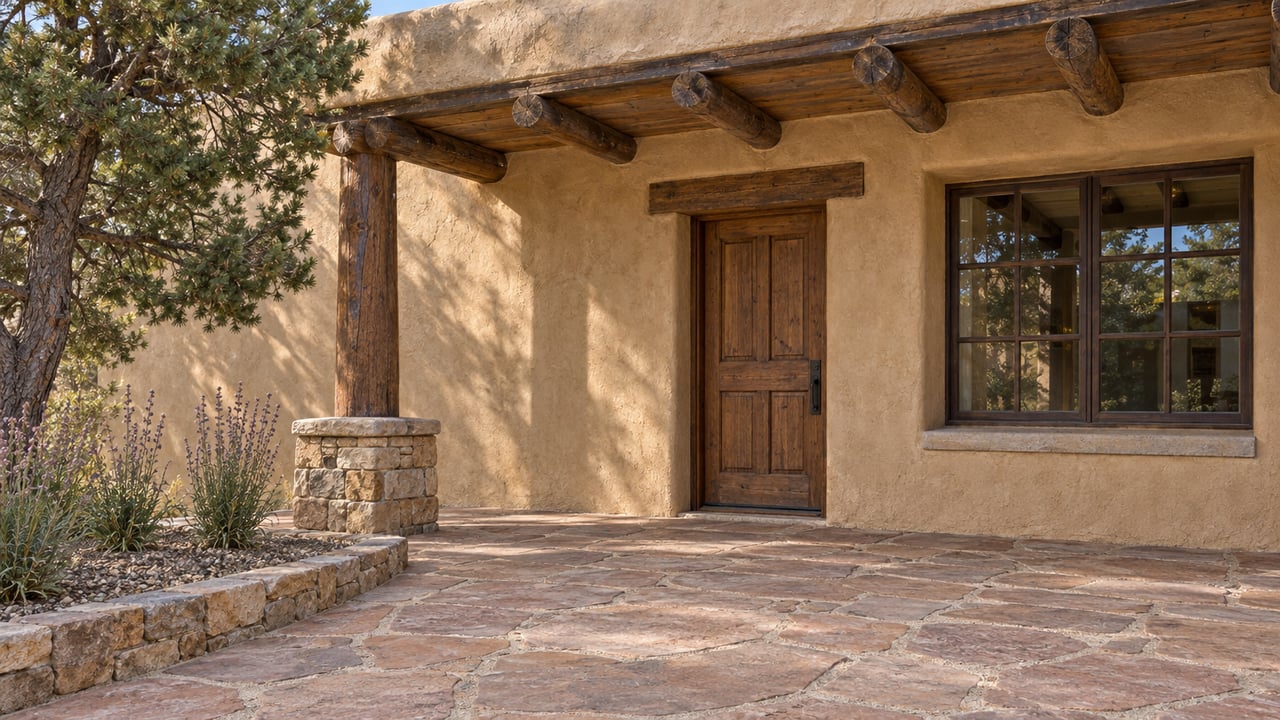
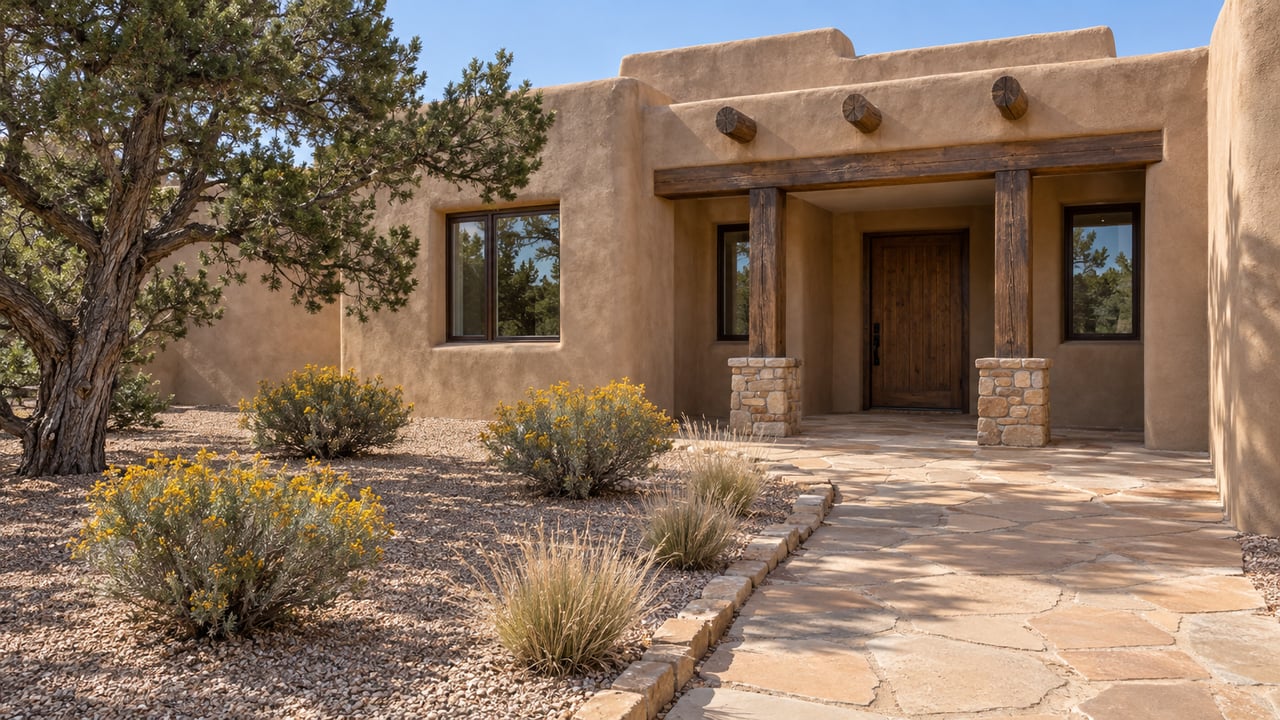
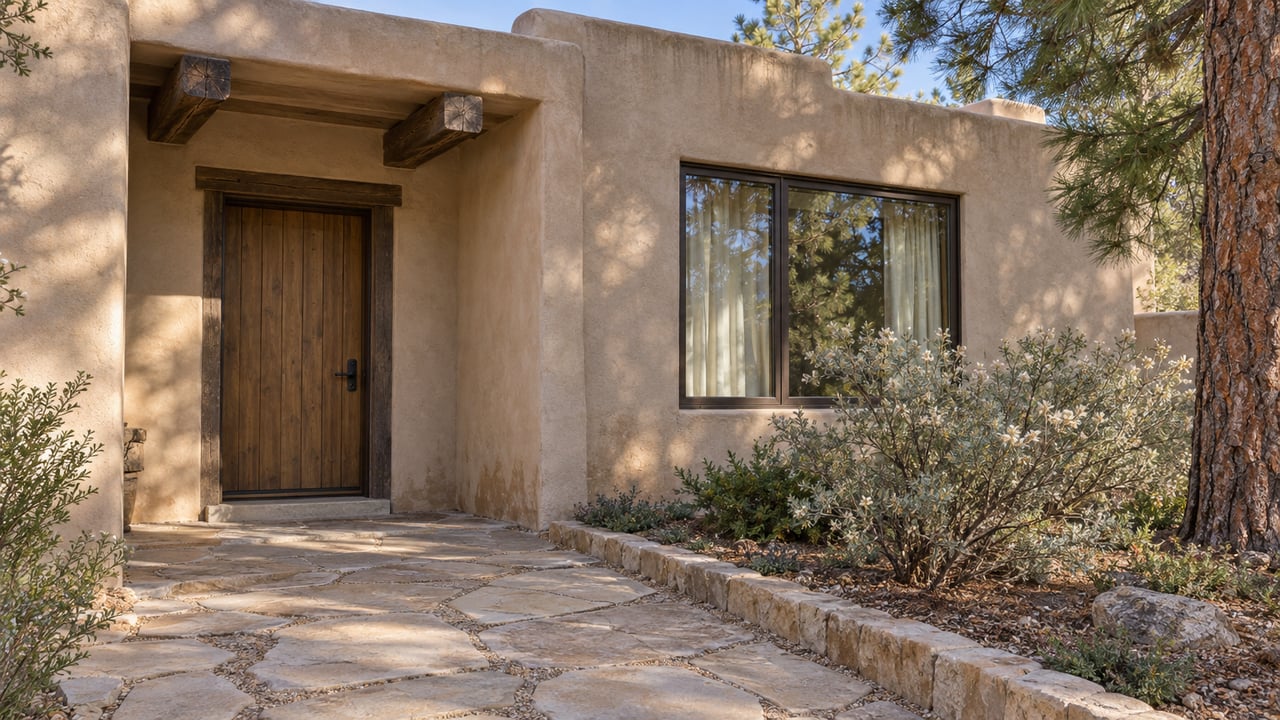
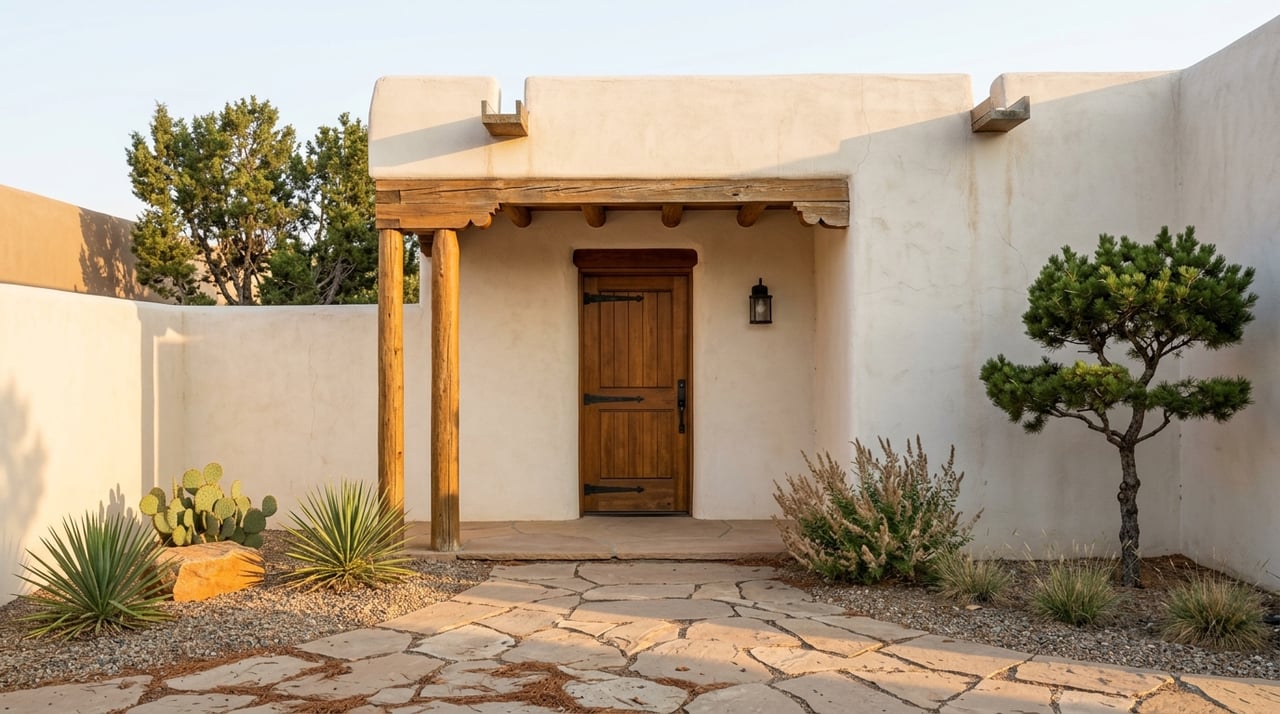
The Historic Eastside is strongly defined by Santa Fe’s adobe tradition and the architectural vocabulary that has shaped the city for generations. Across the area, you will commonly see low-slung, earth-toned homes influenced by Spanish Pueblo and Territorial styles. The result is a neighborhood that feels visually consistent without feeling repetitive.
Many homes feature details people associate with classic Santa Fe design, including flat or low-pitched roofs, thick walls, portals, vigas, and canales. City standards for the Downtown and Eastside historic areas are designed to keep visible exterior work aligned with this older architectural language. That helps preserve the sense of continuity you feel as you move from one street to the next.
Within the Eastside, the Camino del Monte Sol Historic District offers a clear picture of the residential fabric. According to the National Register nomination, the district includes many Pueblo Revival and Territorial Revival dwellings, along with some Spanish Pueblo buildings and a few vernacular structures. It also includes some of the first houses designed by John Gaw Meem, an important detail for buyers who appreciate Santa Fe architectural history.
How the Built Environment Shapes Daily Life
The Eastside is not just visually distinctive. Its physical layout changes how the neighborhood feels day to day. Many buildings sit close to the front property line, and walls and fences often define the street edge.
That creates a sense of enclosure and intimacy on many blocks. Instead of broad suburban setbacks and formal front yards, you are more likely to find a layered streetscape of adobe walls, gates, courtyards, and irregular building placement. It feels historic because it is.
The neighborhood’s greenery also looks different from what buyers may expect in newer areas. Lawns are uncommon in much of the district, while cottonwoods, pines, and older fruit trees provide much of the natural softness. The landscape tends to feel mature, understated, and in keeping with the architecture.
Streets, Lanes, and Walkability
One of the most charming parts of the Eastside is also one of the most practical to understand before you buy. This is not a neighborhood of wide streets, standard sidewalks, and predictable lot layouts. Its street network reflects older property lines and historic land patterns tied to the acequia system.
Some lanes are notably narrow, and sidewalks are largely absent on many interior streets. Acequia Madre includes an intermittent dirt walking path between the road and the ditch, which adds to the neighborhood’s strolling character. In other words, the Eastside can feel very walkable, but it is walkable in a historic Santa Fe way rather than a sidewalk-heavy urban way.
That distinction matters for lifestyle expectations. If you enjoy slower walks, visual interest, and the experience of moving through a neighborhood at an unhurried pace, the Eastside often delivers beautifully. If you are expecting broad pedestrian infrastructure, you may find the experience more informal than in newer planned areas.
Residential Character Near Canyon Road
A common question is whether the Eastside feels residential or commercial. The answer is mostly residential, with Canyon Road serving as the main nearby commercial and cultural corridor. That contrast is one of the neighborhood’s defining strengths.
You can live in a quiet residential setting while staying close to one of Santa Fe’s most active arts destinations. Canyon Road offers galleries, cafes, fine dining, and seasonal traditions such as the Christmas Eve Farolito Walk. Nearby spots also include Patrick Smith Park, the Historic Santa Fe Foundation, Santa Fe Friends, and the School for Advanced Research campus.
For many buyers, that combination is the lifestyle draw. You are not choosing between cultural access and residential calm. In the Eastside, you can often enjoy both.
What Kinds of Homes You’ll Find
Most homes in the Eastside reflect Santa Fe’s historic architectural traditions. You will often see adobe or adobe-style construction, flat roofs, portals, enclosed outdoor areas, and thick-walled forms that suit the local climate and design vocabulary. Many properties also present a strong sense of privacy from the street.
The neighborhood is not uniform, though. The National Register nomination notes variation from tightly enclosed streets with close-set buildings to larger, more open parcels. Some parts feel intimate and tucked away, while others read more like compound-style properties with a broader sense of space.
Most buildings in the Camino del Monte Sol Historic District are single-story, and none exceed two stories. That lower profile contributes to the neighborhood’s human scale and helps preserve the visual rhythm that makes the Eastside feel so cohesive.
What Buyers Should Know About Renovations
If you are considering a purchase in the Historic Eastside, preservation review should be on your radar from the start. The City of Santa Fe Historic Preservation Division assists property owners in the city’s five historic districts, and exterior changes to contributing and significant structures are governed by historic-district rules.
That means you should not assume you can remodel freely, even if changes seem minor. Exterior work may require review, and design standards are intended to keep new work compatible with surrounding Santa Fe style. For buyers who love authenticity, this review process can help protect neighborhood character. For buyers planning major changes, it is an important layer of due diligence.
This is where thoughtful local guidance matters. A home that looks simple on the surface may come with meaningful design and approval considerations, especially in a neighborhood where details like texture, color, wall form, and roofline all contribute to the larger historic setting.
Why Lot History Matters
Older neighborhoods often come with older parcel patterns, and the Eastside is a good example. The City of Santa Fe states that a legal lot of record is required for permits and development review. Lots created before December 5, 1962 may be pre-code lots that do not meet current standards such as minimum lot area.
That does not automatically mean there is a problem, but it can affect what is possible. The city also notes that new development on legal nonconforming lots can be constrained by lot size, shape, topography, configuration, or existing conditions. In a neighborhood with narrow lanes and historic lot patterns, that is highly relevant.
For buyers, the key takeaway is simple: charm and complexity often come together. If you are purchasing with future plans to expand, reconfigure, or substantially alter a property, it is wise to understand the lot’s legal status and physical constraints early in the process.
Is the Historic Eastside Right for You?
The Historic Eastside tends to appeal to buyers who care deeply about place. If you are drawn to architecture, walkable cultural surroundings, mature landscaping, and a neighborhood that feels rooted in Santa Fe’s history, it can be a remarkable fit.
It is especially compelling if you value homes with character over uniformity. Here, the appeal is not just square footage or finishes. It is the way walls meet the street, the quiet of a narrow lane, the texture of adobe, and the ability to step into a neighborhood that still feels distinctly Santa Fe.
At the same time, buying here usually calls for a careful eye. Historic review, lot configuration, and the realities of older homes all deserve thoughtful attention. With the right guidance, you can move forward with clarity and confidence.
If you are thinking about buying or selling in Santa Fe’s Historic Eastside, working with someone who understands both the market and the architecture can make all the difference. Paige Cochran brings a thoughtful, design-aware approach to Santa Fe real estate and can help you navigate the details with confidence.
FAQs
What is daily life like in Santa Fe’s Historic Eastside?
- Daily life in Santa Fe’s Historic Eastside is typically quiet, residential, and closely connected to art, history, and short walks near Canyon Road’s galleries, cafes, and events.
What types of homes are common in Santa Fe’s Historic Eastside?
- Homes in Santa Fe’s Historic Eastside are commonly adobe, Pueblo Revival, Territorial Revival, Spanish Pueblo, or related Santa Fe vernacular styles, often with flat roofs, portals, walls, and traditional exterior details.
Is Santa Fe’s Historic Eastside walkable?
- Santa Fe’s Historic Eastside is walkable for strolling and enjoying the neighborhood, but many interior streets are narrow and sidewalks are limited or absent in some areas.
Is Santa Fe’s Historic Eastside mostly residential or commercial?
- Santa Fe’s Historic Eastside is mostly residential, while nearby Canyon Road serves as the main commercial arts corridor.
Can you remodel a home in Santa Fe’s Historic Eastside without review?
- Exterior changes in Santa Fe’s Historic Eastside may require city historic preservation review, especially for contributing or significant structures in the historic district.
Why does lot status matter in Santa Fe’s Historic Eastside?
- Lot status matters because permits and development review require a legal lot of record, and older or nonconforming lots may have limits related to size, shape, topography, or configuration.