By Paige Cochran
Drive through the historic Eastside or along Canyon Road, and you start to notice a pattern. The homes share a visual language of soft edges, earthen color, and rooflines that sit flat against the vast New Mexico sky.
That look comes from centuries of building with the land rather than against it. When you understand the elements behind Santa Fe architecture, you read every home you tour with a sharper eye. Whether you are drawn to a rounded Pueblo Revival casita or a crisp Territorial, knowing these signatures helps you find the Santa Fe home that fits how you want to live.
Key Takeaways
- Flat roofs with parapets and canales are a practical answer to Santa Fe's high-desert climate.
- Adobe walls give Santa Fe homes their signature thermal mass, keeping interiors cooler in summer and warmer in winter.
- Interior details like vigas, kiva fireplaces, and nichos carry the handcrafted character that defines Santa Fe real estate.
- Pueblo Revival and Territorial are the two dominant styles, and each has telltale features you can spot from the curb.
Why Do Santa Fe Homes Have Flat Roofs?
Flat roofs define the Santa Fe skyline because they suit the region's dry, high-desert climate and reflect the earliest earthen building traditions of northern New Mexico. At roughly 7,000 feet, the city sees intense sun, low humidity, and short summer rains, and a flat roof with a low surrounding wall, called a parapet, handles all of it well.
The clever part is drainage. Because water cannot run off the edge, builders add canales, the sculptural waterspouts that project from the parapet and carry rain clear of the walls. On many Santa Fe homes, these canales become a design feature in their own right.
The clever part is drainage. Because water cannot run off the edge, builders add canales, the sculptural waterspouts that project from the parapet and carry rain clear of the walls. On many Santa Fe homes, these canales become a design feature in their own right.
What to Look for on the Roofline
- Parapets that rise above the roof and give the home its clean, boxy silhouette.
- Canales positioned to move water away from the adobe or stucco below.
- Rounded parapet edges on Pueblo Revival homes or brick coping on Territorial ones.
What Makes Adobe Walls Central to Santa Fe Architecture?
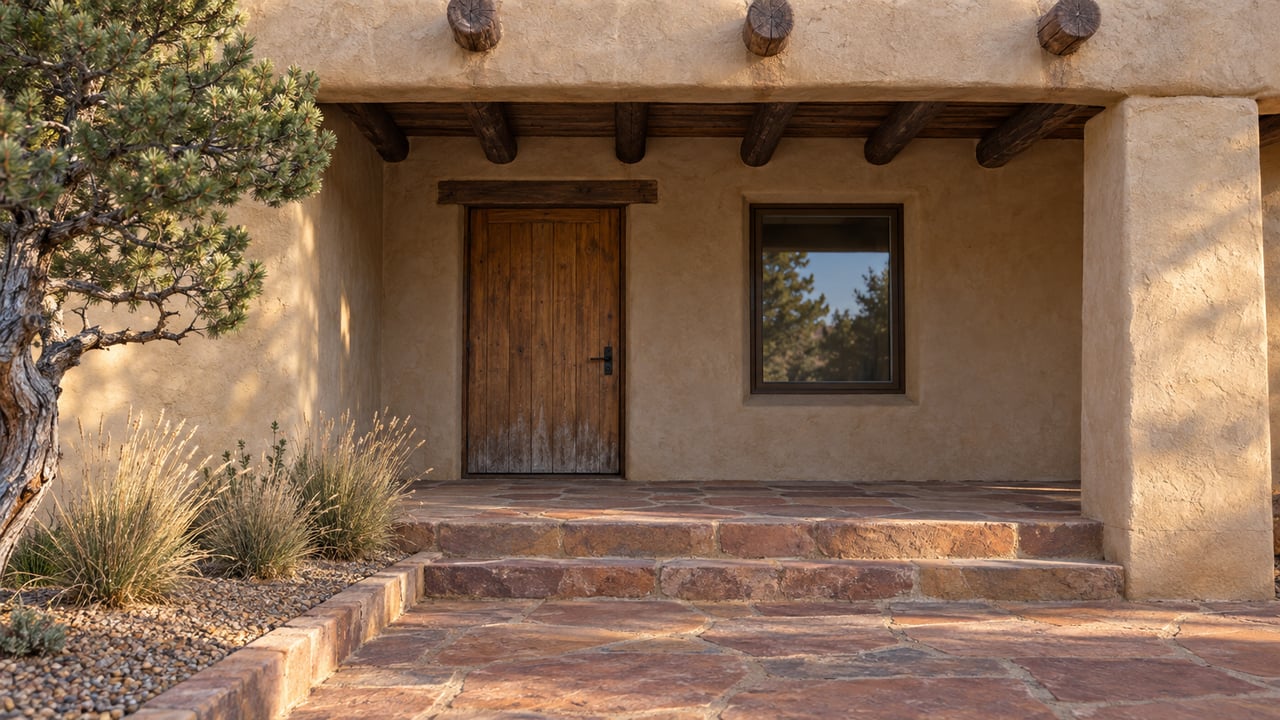
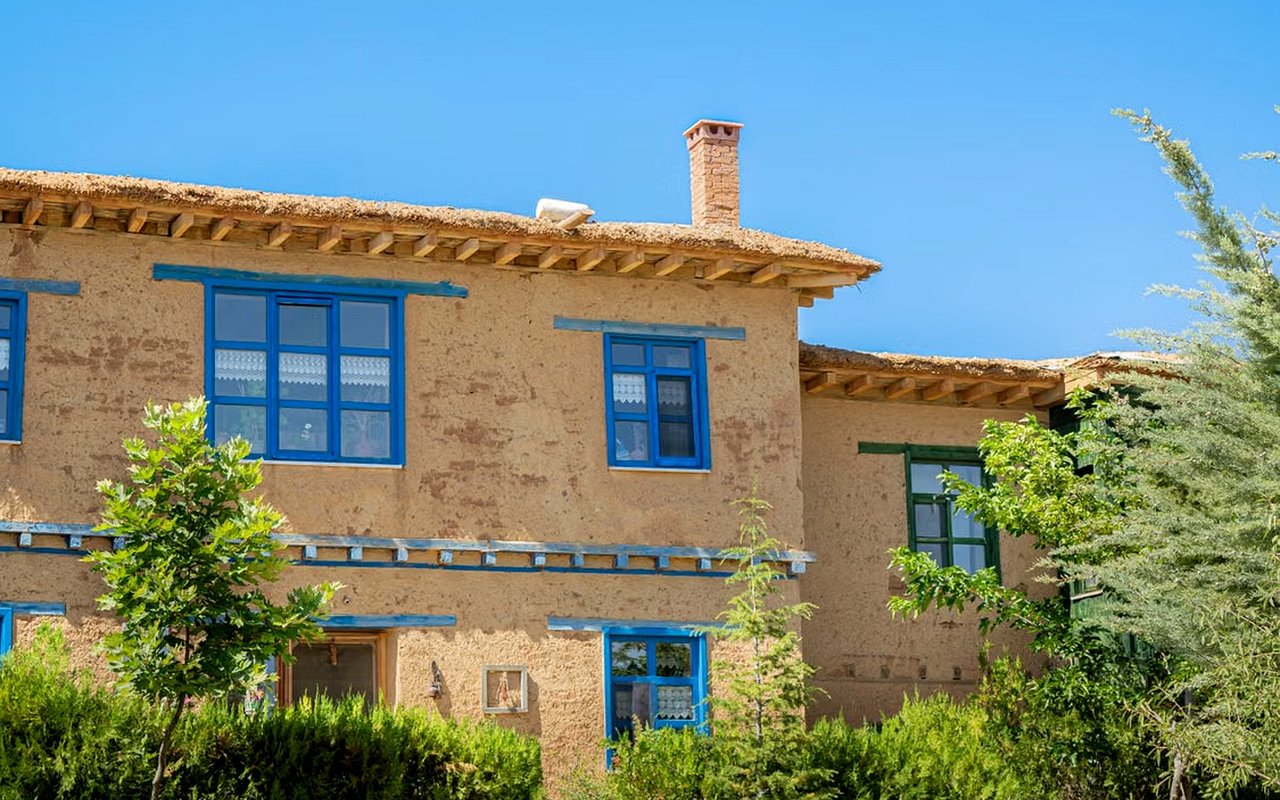
Adobe walls are critical in Santa Fe architecture because they provide natural insulation, sculptural form, and a direct link to building methods used here for generations. Traditional adobe is made from sun-dried earth bricks, and the resulting walls are thick, often more than a foot deep.
The mass absorbs heat during the day and releases it slowly after dark, which keeps interiors comfortable through the swings of a high-desert day. The soft, hand-finished surface also gives Santa Fe homes their rounded corners and gentle shadows.
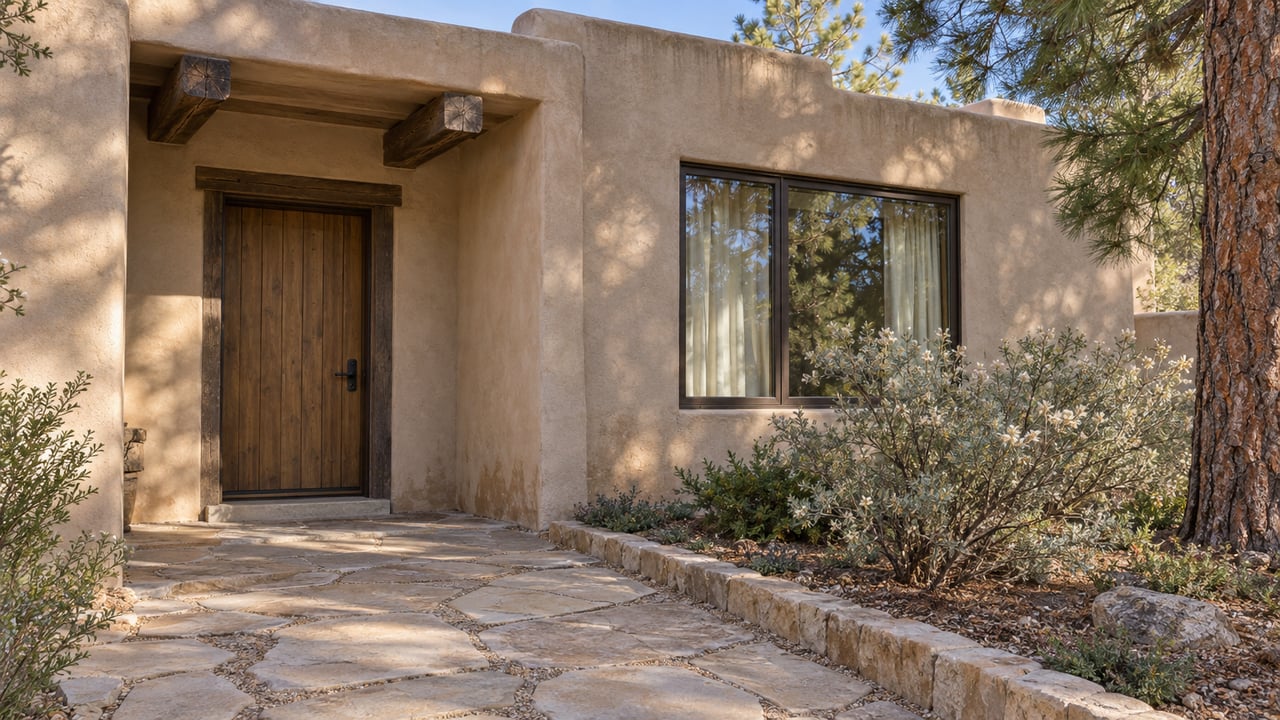
Not every wall is solid earth. Many newer Santa Fe homes use frame construction with stucco shaped to echo the adobe look, giving you the appearance and much of the warmth with modern methods.
How Adobe Shapes a Home
- Thick walls that create deep window wells and cool, quiet rooms.
- Earth-toned stucco finishes in browns, tans, and soft pinks that sit easily in the landscape.
- Coyote fences of vertical cedar that carry the natural material out into the yard.
Which Interior Details Define the Santa Fe Style?
The interior details that characterize the Santa Fe style include vigas, kiva fireplaces, nichos, and bancos, each adding handcrafted warmth to a home. These features give a simple earthen structure real depth and personality.
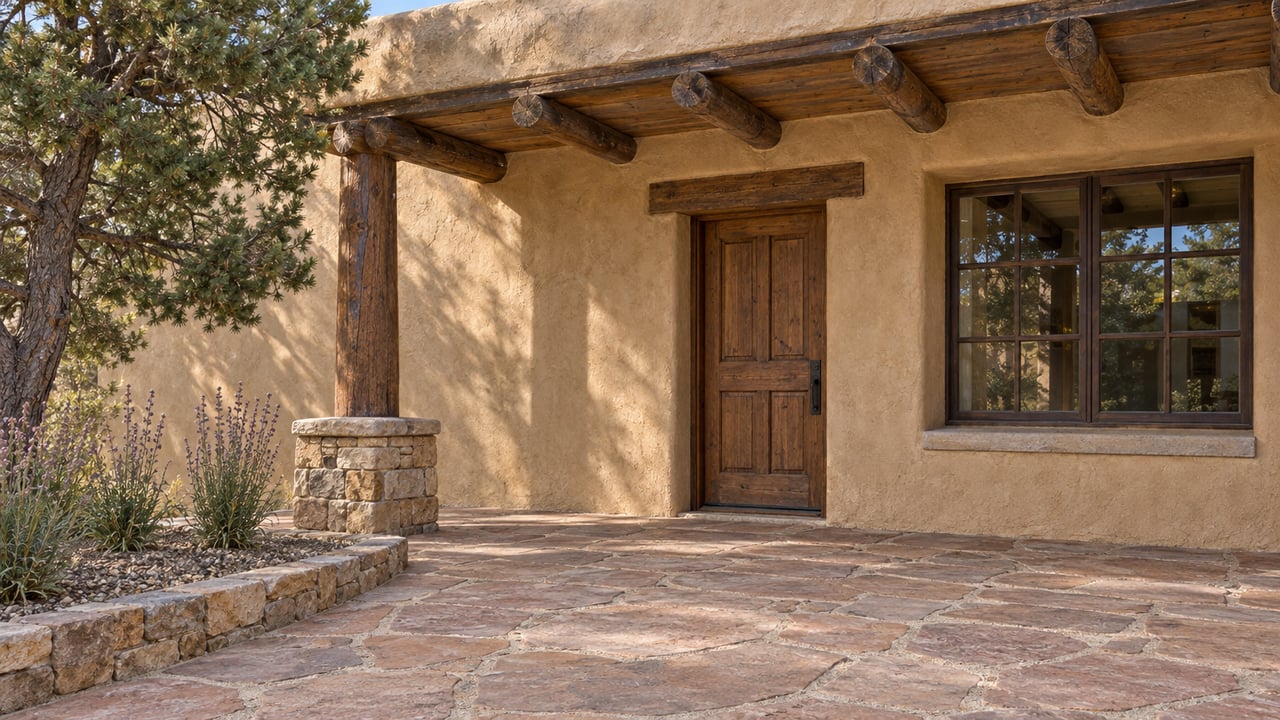
Vigas are the round wooden beams that support the ceiling and often extend through the exterior wall, paired with latillas, which are the smaller poles laid across them. In the corner, you may find a kiva fireplace, shown as the rounded, sculpted hearth that anchors so many Santa Fe living rooms.
Smaller touches carry the same spirit. Nichos are recessed niches set into the walls for art or pottery, and bancos are built-in benches that flow out of the adobe itself. Outside, a portal, or covered porch supported by carved posts, extends your living space into the open air.
Interior Signatures to Notice
- Vigas and latillas overhead, giving ceilings texture and rhythm.
- A kiva fireplace tucked into a corner as the room's focal point.
- Nichos and bancos that show the sculptural, hand-built quality of Santa Fe real estate.
How Do Pueblo Revival and Territorial Homes Differ?
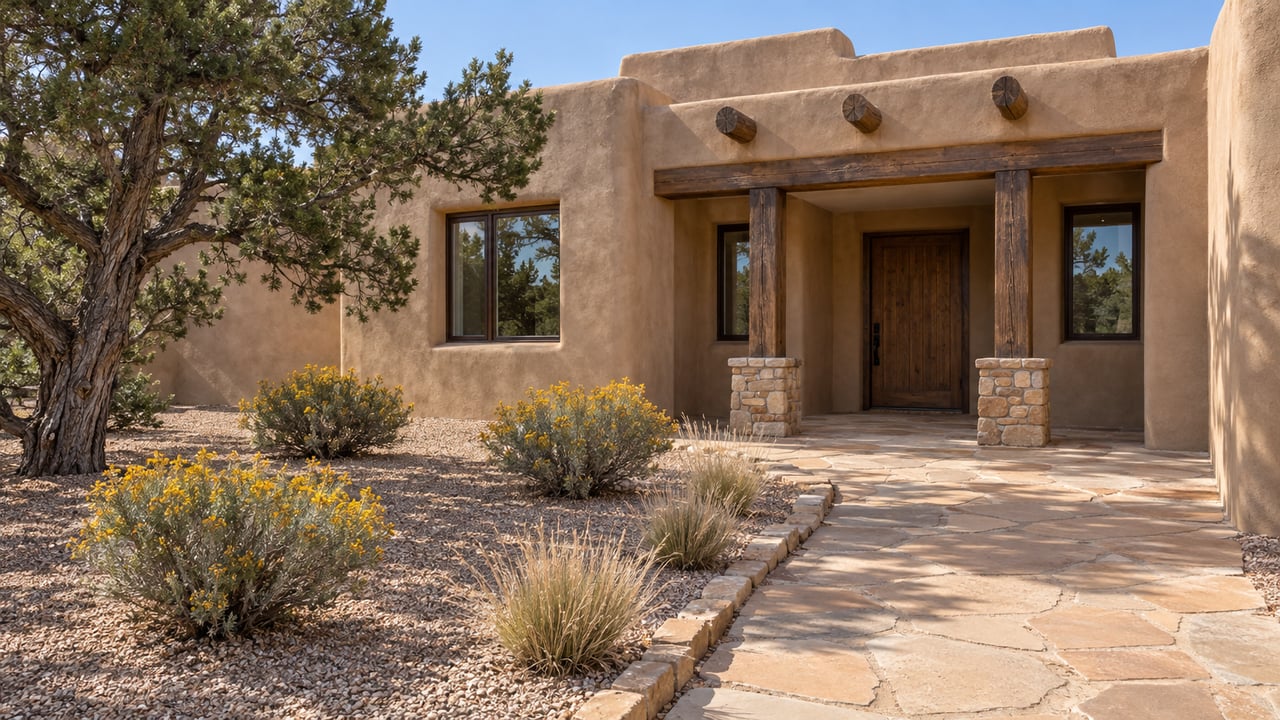
Pueblo Revival and Territorial homes differ mainly in their edges and trim, with Pueblo Revival reading soft and rounded while Territorial is crisper and more formal. Both are welcome across Santa Fe’s real estate landscape.
Pueblo Revival leans into the earthen tradition with rounded parapets, flowing stucco, and exposed vigas. It feels organic, as though the home rose from the ground, and it is the style most buyers picture for Santa Fe. Territorial style arrived later and added crisper touches to the adobe base, including brick coping along the parapet, squared wooden posts, and milled window trim topped with a small pediment.
Pueblo Revival leans into the earthen tradition with rounded parapets, flowing stucco, and exposed vigas. It feels organic, as though the home rose from the ground, and it is the style most buyers picture for Santa Fe. Territorial style arrived later and added crisper touches to the adobe base, including brick coping along the parapet, squared wooden posts, and milled window trim topped with a small pediment.
Quick Ways to Tell Them Apart
- Rounded, sculptural edges point to Pueblo Revival.
- Brick coping and crisp white window trim point to Territorial.
- Squared posts and pedimented lintels are Territorial signatures.
FAQs
Are All Homes in Santa Fe Required to Look Alike?
Not every home is required to match, though properties within Santa Fe's historic districts do follow design guidelines that preserve the traditional look. These guidelines shape features like rooflines, wall finishes, and window trim so that the streetscape stays cohesive. Outside of those districts, you will find more variety, including contemporary takes on the classic Santa Fe style.
Is Adobe the Only Building Material Used in Santa Fe?
Adobe is iconic, but it is far from the only material behind Santa Fe homes. Many properties use frame construction finished in stucco to capture the adobe look with modern building methods. As your agent, I can help you understand what is behind the walls of any home you are considering.
What Is a Canale on a Santa Fe Home?
A canale is the waterspout that drains a flat roof, projecting from the parapet to carry rain away from the walls below. Because Santa Fe homes rarely have sloped roofs and gutters, canales do the important work of moving water off the roof, and they double as a distinctive sculptural accent.
How Santa Fe Architecture Shapes Your Home Search
Once you can read flat roofs, adobe walls, vigas, and canales, touring Santa Fe real estate becomes a richer experience. Every home tells you how it was built and how it will live through the seasons.
The Santa Fe style is more than a look; it is a practical response to this landscape that has held up for centuries. Whether you love the rounded warmth of Pueblo Revival or the clean trim of a Territorial, there is a home here that speaks to you. When you are ready to find it, I would love to help. Reach out to me, Paige Cochran, to explore Santa Fe homes for sale and find the property whose architecture feels like home.
The Santa Fe style is more than a look; it is a practical response to this landscape that has held up for centuries. Whether you love the rounded warmth of Pueblo Revival or the clean trim of a Territorial, there is a home here that speaks to you. When you are ready to find it, I would love to help. Reach out to me, Paige Cochran, to explore Santa Fe homes for sale and find the property whose architecture feels like home.